
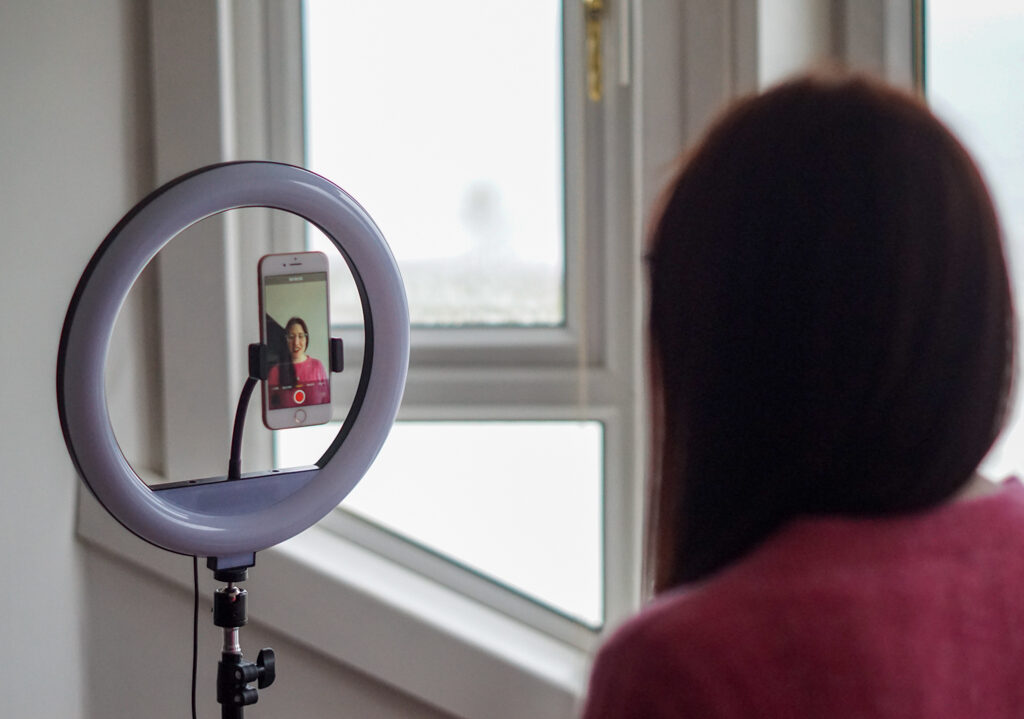
Showing up on video is great for your business!
But my God is it nerve-wracking!? Being confident on camera isn’t something that comes naturally to everyone. When I first started my business I knew talking on camera was important but it was something I really struggled with. Most individuals will scrutinise everything about the way they talk, how certain words are pronounced, facial movements or hand gestures we make. And do you know what? You’re most likely the only person that notices these things. The people watching your video are far more interested in what you’re saying rather than what you look like while you’re saying it.
The good news is, with a bit (or a lot) of practice it is possible to build your confidence on camera and feel happy posting them for the world to see. I have four tips that worked for me, and these can help you too. We’ll have you chatting away on Instagram Stories in no time at all!
Practice filming yourself
To get confident on camera you need to get used to seeing and hearing yourself on video. You can practice by filming on the camera on your phone or laptop and watch them back. These videos don’t have to go anywhere, they can be just for you, to begin with.
Once you feel comfortable with where to look, and start to sound confident talking to no-one, you know you’re ready to post your first public video. I’ll be honest, for me, it took a while to feel comfortable essentially talking to no-one while filming. But we live in a world where people are constantly just talking to the camera on their phone. Younger Millenials and GenZ kids do it without thinking so channel some of their confidence when you’re making your own videos.
Plan what you will talk about
One thing that makes you sound confident on camera is talking like you really know exactly what you’re saying. Waffling, or repetition, makes you sound unsure and can make viewers disengage.
Use a post-it note to jot down talking points and stick it next to your camera. You can even write a script if this would be more helpful. Have it on your laptop screen behind your camera so you can refer to it if you need to.
Add captions to your videos
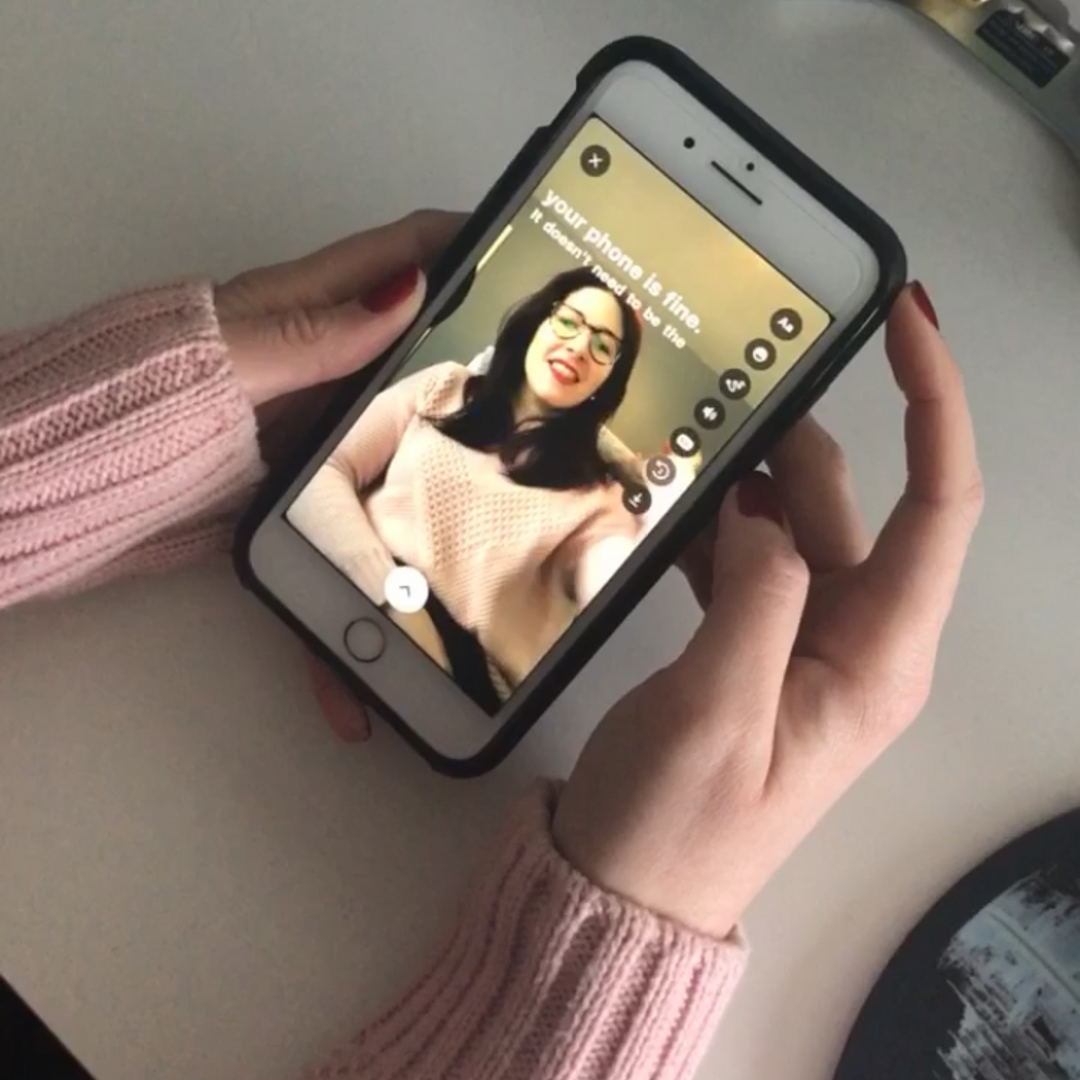
Whether you’re posting videos on Instagram Stories, Reels, Facebook or YouTube please, please, please add closed captions to them! There is nothing worse, and more confidence knocking than spending time filming a video or Stories and then having nobody engage with it at all. Closed captions can make or break engagement on videos. I’m really passionate about captioning your videos, I bang on about this all the time, but with good reason.
Captioning video is SO important for a couple of reasons; first up, a lot of people actually watch videos without sound (around 85% of Facebook users), but more importantly, there over 18 million people* in the UK alone who are deaf or have a hearing impairment. Adding closed captions to your videos ensures that the content is accessible and means people aren’t being excluded from enjoying the funny, educational or chatty videos you’re sharing online.
Adding captions can add time when it comes to creating your videos, but it’s worth spending the time to do it. Most platforms now have an option to auto-generate captions. They don’t always pick up accents correctly but don’t worry you can edit the captions before posting.
When you’re uploading a Reel to Instagram, make sure you’ve toggled on “Enable closed captions” under “More options”. This can be found if you scroll to the bottom of the screen when you’re on the screen you add a caption for a new Reel.
Set yourself a challenge
This is what ultimately worked for me when I was trying to become more confident on camera. At the start of 2020, I challenged myself to show up and talk on Instagram Stories at least once a week. Despite 2020 being a weird and unpredictable year, I did pretty well with this challenge and it really did help with my confidence!
If once a week feels too much to start with, how about once a month? Pick a topic to discuss; it could be a new product or service launch, a business update, a Q&A or just a chatty series of Stories to help your followers get to know the face behind the business better!
Have I convinced you to try videos yet?
Showing up and talking on camera is such a personal way to communicate. It encourages responses and engagement on Instagram Stories and on Facebook and allows you to build rapport with people before meeting them in person.

*According to RNID (Royal National Institute for Deaf People)